



Interview with José Nistal CEO-CIO of Zubi Capital AM
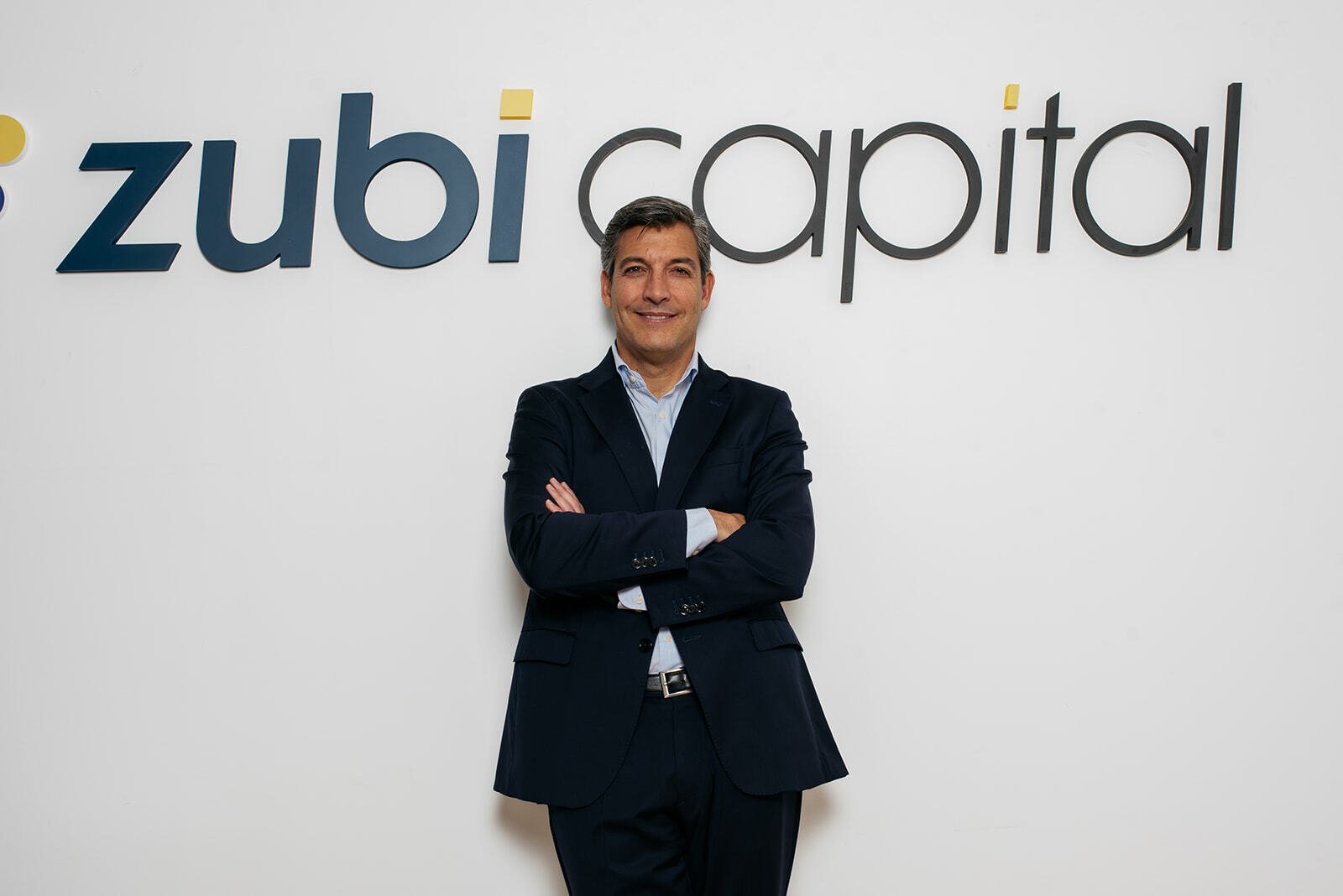
1. For those who don't know you yet, introduce us to Zubi Capital AM, what is your investment thesis and working methodology? What kind of problem or transformation are you looking to finance?
Zubi Capital AM is a management firm specialising in impact investment vehicles, guided by the conviction that investment can be a driving force both for achieving solid financial returns and for creating lasting positive social and environmental impact.
The firm centres its strategy on integrating financial indicators with social and environmental performance metrics into investment decision-making. In this way, we unite capital and purpose, while optimally mitigating the risks inherent in this type of investment, giving investors the opportunity to align their financial resources with their values.
Our thesis starts with a very clear idea: major social and environmental challenges need capital, but they also need well-designed financial instruments. The SpainNAB report on the role of impact finance in the social economy in Spain, developed during 2025, points precisely to that mismatch between the real needs of many impact organisations and the conventional criteria of the financial system. Among the barriers identified are high credit costs, lack of understanding of certain business models, lack of guarantees, reluctance to take on debt, and certain organisational limitations.
At Zubi Capital AM we work with two complementary funds. On one hand, ZCIVF Impact Venture Finance, an impact debt fund, sector-agnostic, that finances companies addressing social or environmental challenges directly or indirectly. It is an instrument designed to support company growth without generating excessive dilution for founding teams.
On the other hand, we manage ZCDCF Diversity Catalyst Fund, an early-stage equity fund and the first pre-seed/seed fund with a diversity focus in Spain and Europe. It invests in startups led by people from historically underrepresented groups, in companies that develop products or services for these groups, or in businesses that promote diversity within their own teams. In other words, these vehicles are two funds, two responses: debt to grow with control, and early-stage equity to widen access to capital where it has historically been lacking.
Our methodology always starts from the challenge. We use frameworks such as Impact Frontiers and the Theory of Change to understand what we want to change, who it affects, what our contribution is, how much that reality can change, and what risks might compromise the impact. We then translate this into concrete indicators: inputs, outputs and outcomes. That is to say, we are not only interested in counting activity, but in understanding what transformation is taking place and what part of that transformation can reasonably be attributed to the financed company.
2. What you look for in a startup. Beyond metrics, what do you really look at when evaluating a startup? What do you rarely find and would like to see more of?
Beyond metrics, we look for clarity. Clarity about the problem, the customer, the market, and the real capacity of the team to execute and generate triple impact: economic, social and environmental.
A startup can have brilliant technology and still not be investable if it doesn't properly understand who has the problem, who pays to solve it, and what barriers exist to adopting the solution. This is especially important in complex sectors such as logistics, industry, health, energy or infrastructure, where sales cycles are long and trust carries as much weight as innovation.
What we would like to see more of is a better connection between impact and business model. There are companies with a very powerful social or environmental narrative but little economic clarity. The reverse also happens: businesses with good numbers where impact appears as a secondary layer or is even non-existent. Often the best opportunities lie in companies where the solution to social or environmental problem is precisely what generates economic value.
3. The technologies moving capital. Of all the technologies emerging right now, which are you betting on most strongly and why?
We don't look at technology as an isolated category. We are interested in it when it unlocks a transformation that was previously too expensive, too slow, or too difficult to implement.
We are seeing particularly interesting opportunities in energy transition, operational efficiency, circular economy, health, education, financial inclusion, new materials, traceability and infrastructure digitalisation. Also in artificial intelligence, in a cross-cutting way, but not as a buzzword. AI interests us when it enables the transformation of an industry, reduces costs, improves decision-making, automates critical processes, or makes solutions accessible that previously could not scale.
In the port-logistics sector, for example, the potential is evident. The International Maritime Organization aims to reduce the carbon intensity of international maritime transport by at least 40% by 2030 and achieve net-zero emissions around 2050. That objective implies very profound changes in energy efficiency, fuels, digitalisation, port infrastructure and operational models.
There we see room for solutions in route optimisation, emissions measurement and reduction, electrification, traceability, smart asset management, reduction of idle time, predictive maintenance, and supply chain resilience.
The key is not that a startup "uses AI", blockchain or any other emerging technology. The important question is whether that technology solves a priority problem better, more efficiently, or more scalably than current alternatives.
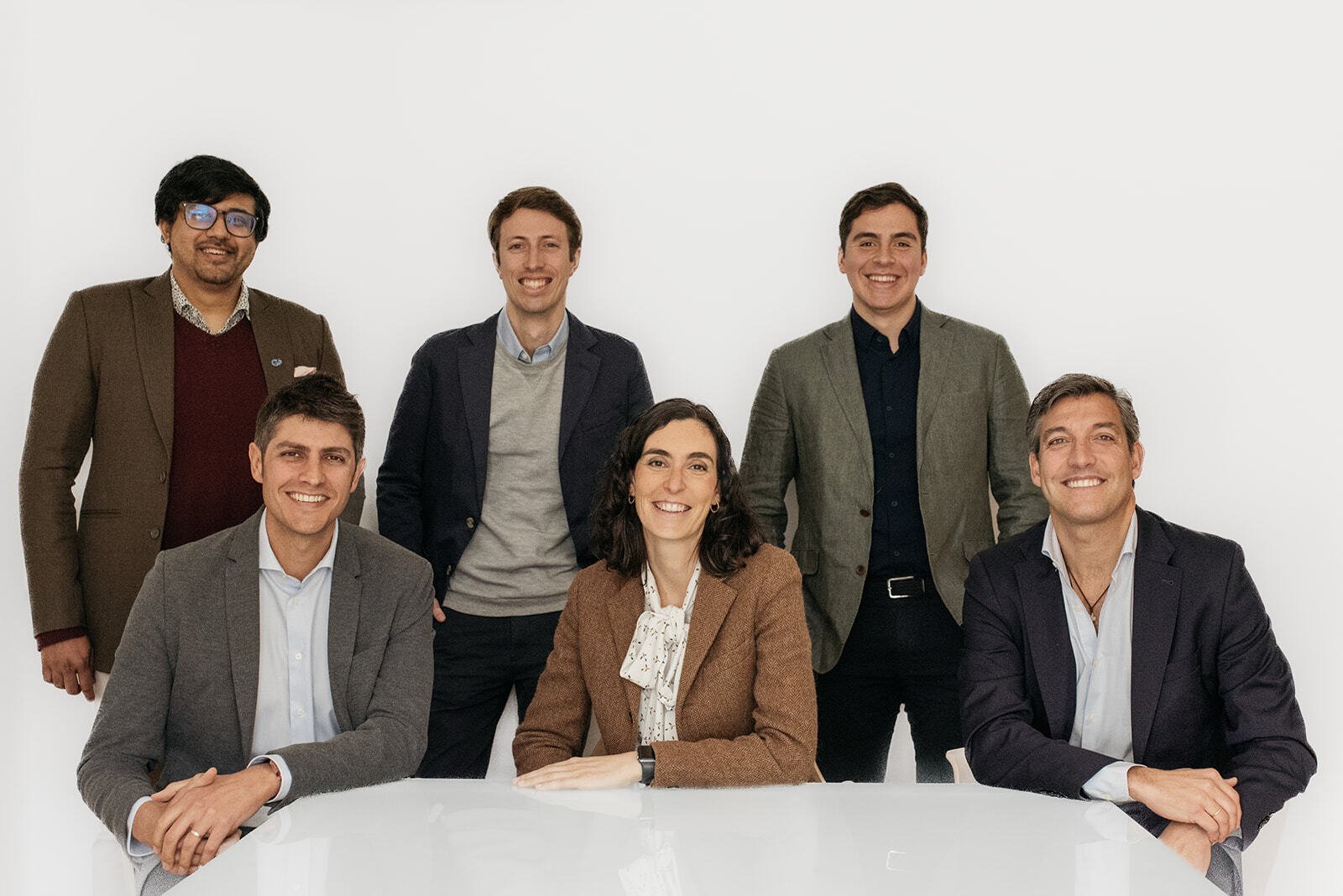 Zubi Capital AM Team
4. From your perspective, what does truly impactful investment look like?
For a long time, impact has been very directly associated with social sectors. That remains necessary, but the transition also involves transforming supply chains, energy consumption, mobility, infrastructure, materials and industrial processes.
In fact, I believe impact investment has a significant opportunity in sectors traditionally considered industrial or infrastructural, such as port logistics.
This is where a firm like Zubi Capital AM can bring a distinctive perspective: financing companies that make strategic sectors more efficient, more resilient, and better prepared for an increasingly demanding regulatory and climate environment.
At Zubi we often say that impact is not what we declare, but what happens. And to know whether it happens, it must be measured properly: from the initial challenge to the outcomes we want to achieve. That is the difference between investing in a good story and investing in real transformation.
5. From pilot to real return. How do you assess whether an innovation has the capacity to scale beyond the "interesting pilot"? What distinguishes startups that achieve real implementations?
A pilot can work because it receives a great deal of attention, close support and a very controlled context. The relevant question is what happens afterwards: whether the customer pays, repeats, expands the contract, and whether the solution is integrated into their daily operations.
To assess that capacity to scale, we look at several things. First, whether the problem is sufficiently high priority for the customer. Second, whether the economic or strategic return is clear. Third, whether the product can be deployed without becoming a bespoke project for every customer. And fourth, whether the founding team understands how to sell within complex organisations.
Impact measurement helps us a great deal here, because it forces a separation between activity and change. At Zubi we work with three levels: inputs (the resources we activate); outputs (the immediate results); and outcomes (the sustainable effects over the medium and long term). That distinction avoids falling into "vanity reporting": counting many things done without really knowing what has changed.
Applied to a startup, a pilot, a demo or a proof of concept are outputs. What matters is knowing what outcome it generates: emissions savings, cost reduction, improved access, less waste, greater safety, inclusion, productivity or resilience.
Startups that achieve real implementations usually have one very concrete virtue: they speak the customer's language. They don't sell "an AI platform", but a reduction in operating costs, an improvement in traceability, lower regulatory exposure, or measurable energy savings.
6. The role of venture capital in open innovation. How does your investment model fit with open innovation dynamics, especially in the port-logistics sector?
Venture capital can be a bridge between startups, corporations and institutions, but for it to work it must bring more than capital. It must help distinguish between a promising solution and a genuinely adoptable one.
In the port-logistics sector this is especially relevant. We are talking about critical infrastructure, complex operations and value chains involving ports, shipping companies, operators, administrations, industrial clients, energy and technology. A startup may have a good solution, but if it doesn't understand that map of stakeholders, it will struggle to scale.
Our model fits well because we analyse companies from two angles simultaneously: financial potential and the capacity to generate a verifiable transformation. From there we can provide support with capital, network, investor insight and a long-term perspective.
Open innovation works when it connects with the business's strategic challenges: efficiency, safety, traceability, decarbonisation, resilience and competitiveness. In logistics and ports, those challenges are no longer peripheral. They form part of the capacity to compete in an increasingly demanding regulatory, energy and climate environment.
For this to work, corporations also need to formulate their challenges more clearly. Launching startup calls is not enough. There must be budget, internal owners, clear metrics, and genuine willingness to implement.
7. What do you consider the biggest barrier to more capital flowing into innovation: a lack of startups with traction, sector resistance, long sales cycles… or something nobody is naming yet?
I think the main barrier is not simply a lack of capital. It is the lack of alignment between the type of capital available, in terms of acceptable risk-return and willingness to commit over the long term, and the real needs of companies trying to generate impact.
Many impact organisations do not fit well within traditional financing criteria. Some have longer growth cycles, others need less dilutive instruments, others require support in measurement or market access. The barriers are not only external (such as high credit costs or lack of guarantees) but also internal, such as reluctance to take on debt or organisational limitations in structuring financing properly.
Then there is another problem: the misalignment between the startup's timeline, the customer's timeline, and the capital's timeline. The startup needs speed. The corporate customer needs security, integration and trust. The investor needs signals of adoption, return and scalability. When those three timelines are not coordinated, you get pilots that don't scale, endless commercial processes and delayed funding rounds.
This is why we believe the role of a firm like Zubi Capital is not just to invest, but to design vehicles that respond better to those realities through genuine engagement with portfolio companies, in order to optimise expected financial and impact returns. Impact debt can be a very useful tool for companies that already have traction and want to grow without losing control of their mission. Early-stage equity with a diversity lens, on the other hand, allows us to reach founding teams earlier, those who have historically had less access to capital.
For more investment to flow into innovation we need better startups, yes, but also better buyers, better collaboration mechanisms, and better ways of measuring the value created, as well as regulation and fiscal policies that encourage financial and non-financial institutions to take on risk.
8. What advice would you give to someone who wants to start a business, in general and in the port-logistics sector specifically, today?
I would tell them not to start with the technology. Start by spending time with the customer and understanding them.
In the port-logistics sector there are enormous opportunities, but also a great deal of complexity. There is regulation, critical infrastructure, well-established processes, multiple decision-makers, and very high operational demands. A solution can be technically sound and still have no future if it doesn't fit the reality of the sector.
My advice would be to spend more time understanding where the hidden costs are, where efficiency is being lost, what risks are genuinely concerning, what regulatory requirements are coming, and what decisions are the highest priority for operators.
I would also say: think from the start about how you are going to demonstrate value. In traditional sectors, an innovative pitch is not enough. You need to bring data, use cases, metrics and a clear return proposition.
And above all: don't try to solve everything at once. Major transformations usually begin with a concrete improvement that the customer recognises as urgent. If you solve that first problem well, the market gives you permission to grow.
9. If you had to summarise the future of open innovation in one word, what would it be?
Adoption. For years we have talked a great deal about open innovation, ecosystems and pilots. The next phase will be less discursive and more operational. The question will no longer be how many startups a corporation knows, but how many solutions it has integrated, what results they have generated, and what impact can be demonstrated.
%20(5)%201.png "Logo FV (Vertical) (5) 1")