



New pilot: a deep tech material that “cools” the inside of shipping containers
During the summer months, shipping containers exposed to solar radiation can reach internal temperatures above 50 °C. These conditions compromise the preservation of cargo, affect the performance of equipment and may pose a heat risk to the people who work inside them.
Against this backdrop, the Valenciaport Sandbox has hosted a new pilot whose results show that it is possible to significantly reduce the internal temperature of containers with zero energy consumption.
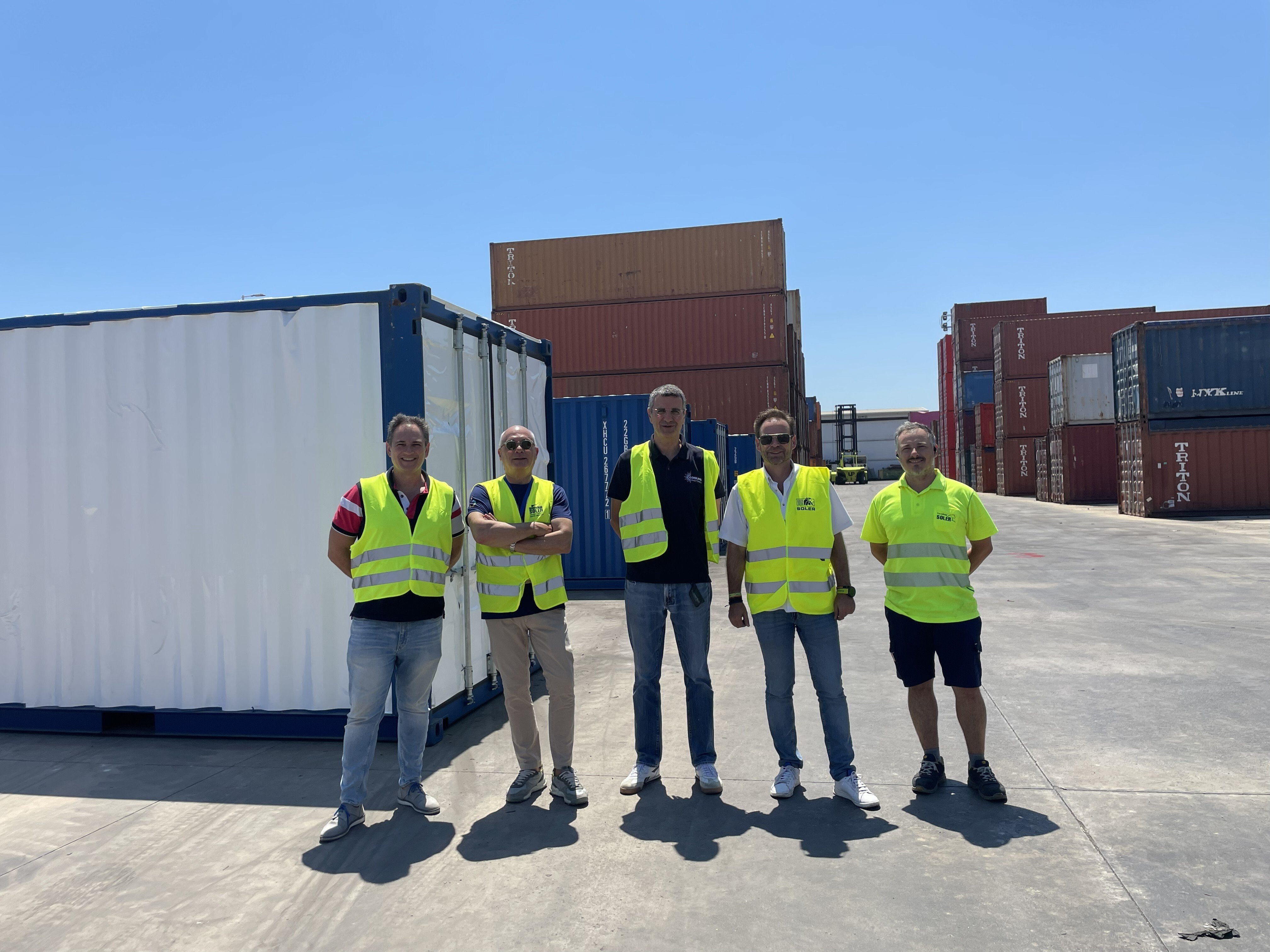
A new pilot at the Valenciaport Sandbox
The Valenciaport Sandbox is a space designed to enable startups and technology companies to validate their solutions in a real port environment, with live port operations and measurable data. This new pilot is a clear example of its purpose.
The technology tested was developed by Cooling Photonics, a deep tech company specialising in passive radiative cooling materials. The trial was carried out at the facilities of Transbase Soler, with Opentop acting as facilitator.
Trial methodology
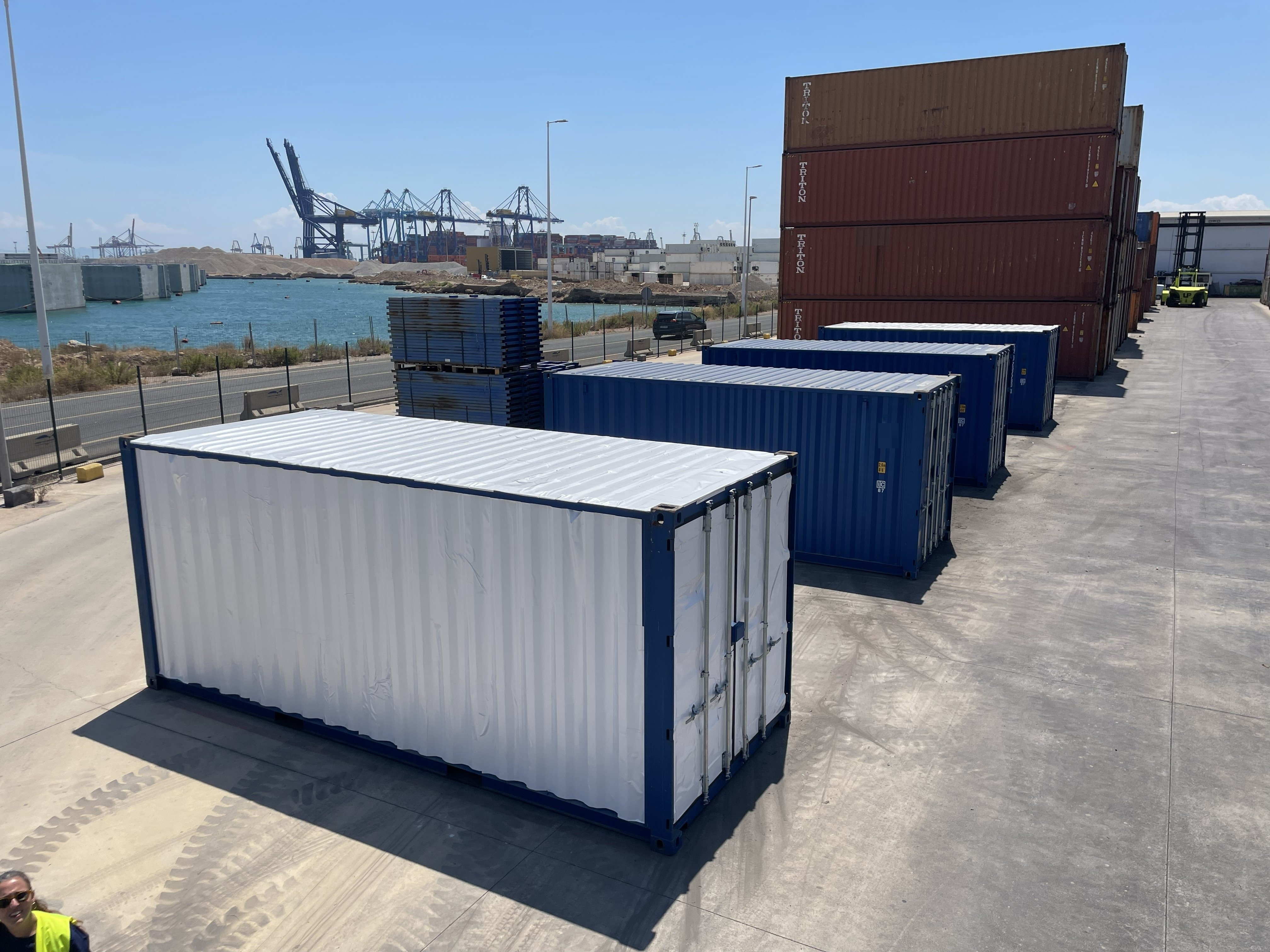
The trial ran for fifteen consecutive days in summer 2026. Four identical 20-foot shipping containers were used, placed at the same site and subject to the same solar exposure, each with a different configuration:
- Reference container, with no treatment.
- Container with a conventional internal thermal blanket.
- Container with the material applied to the roof only.
- Container with the material applied to the roof and side walls.
- The standard container reached a maximum temperature of 53 °C and spent more than a third of the time above 40 °C.
- The fully coated container never exceeded 34.2 °C.
- The accumulated heat load above 30 °C fell by 93%.
- Protection of cargo and equipment, by keeping goods within suitable temperature ranges and reducing condensation.
- Improved working conditions, in containers used as warehouses, workshops or offices.
- Climate change adaptation, as a resilience tool in the face of increasingly long and intense summers.
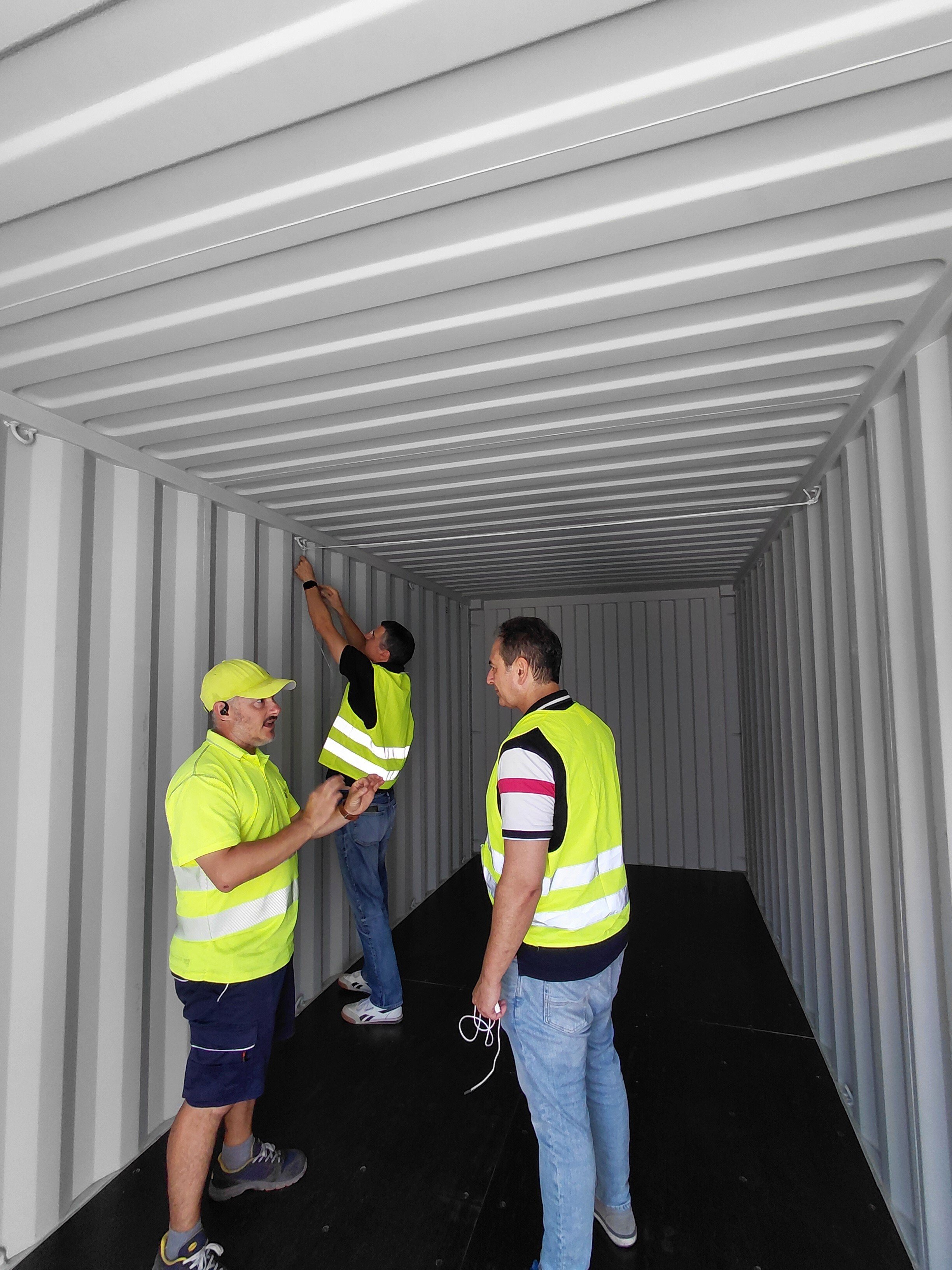
Each unit was fitted with an independent sensor that recorded the internal temperature every 15 minutes, producing more than 5,600 readings.
Results
The data gathered during the trial yield conclusive results:
- The standard container reached a maximum temperature of 53 °C and spent more than a third of the time above 40 °C.
- The fully coated container never exceeded 34.2 °C.
- The accumulated heat load above 30 °C fell by 93%.
It is also worth noting that the material proved most effective on the days with the highest solar radiation, in other words, under the conditions in which it is most needed.
Applications for the port and logistics sector
The properties of this material open up a wide range of applications for ports, terminals, logistics operators and depots:
- Protection of cargo and equipment, by keeping goods within suitable temperature ranges and reducing condensation.
- Improved working conditions, in containers used as warehouses, workshops or offices.
- Climate change adaptation, as a resilience tool in the face of increasingly long and intense summers.
This pilot highlights the value of collaboration between the different players in the ecosystem: a technology company with an innovative solution, a Port Community company willing to put it to the test, the Port Authority of Valencia as the driving force behind the Valenciaport Sandbox as a testing ground, and Opentop and the Fundación Valenciaport as facilitators of the process.


%20(5)%201.png "Logo FV (Vertical) (5) 1")