


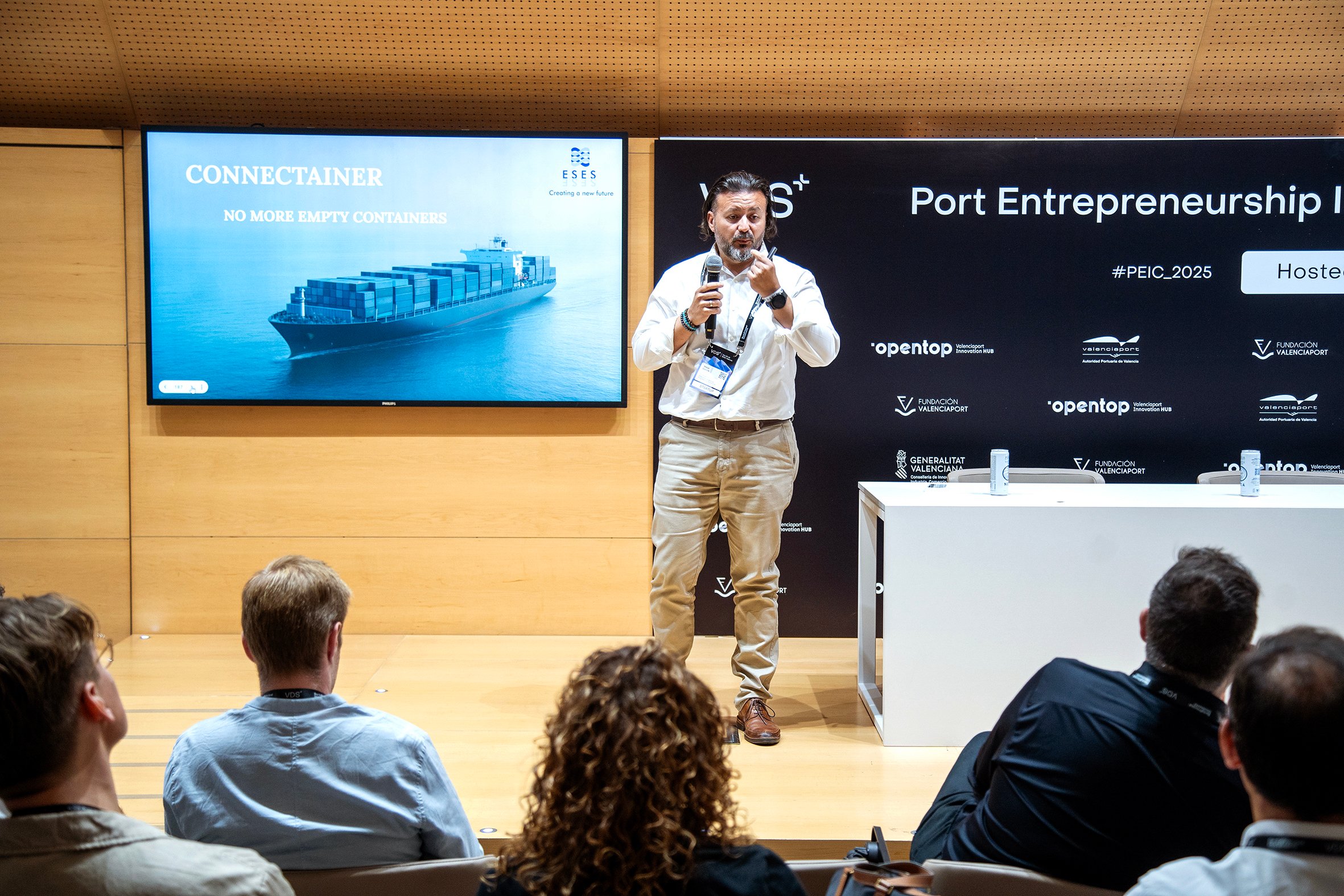
Interview with Jesús García, co-founder of Connectainer
LinkedIn: https://www.linkedin.com/in/jesusgarciaconnectainer/
Today we introduce Jesús García, founding partner and co-CEO of Connectainer (Effective Seaborne Engineering Solutions), co-inventor of a patented modular container technology and a leading voice in maritime logistics innovation. A career built on three pillars he himself defines as fundamental: honesty, respect and teamwork. We invite you to get to know Jesús in this interview.
1) Every startup is born from a deep conviction. What was the exact moment you said "this has to exist"? What problem drove you to create your solution?
It came from something very concrete, directly linked to our profession. When we were working at China Shipping, we constantly suffered from the shortage of 20-foot equipment and the problems involved in evacuating and repositioning 40-foot units. That is when we started asking ourselves how it was possible that, in such a sophisticated system run by such powerful companies, this situation was simply accepted as "structural", treated as an unavoidable bottleneck.
After several attempts at finding the right concept and always thinking from the shipowner's perspective (their real constraints, their operational needs and the requirement for compatibility with existing regulations and international logistics chains) we finally found the configuration we had been looking for. At that point it became clear: there is a problem considered "endemic" and it is possible to solve it with a solution designed to adapt to the market, without requiring the market to make major changes to absorb it. That is when we said: this needs to exist.
2) Logistics is a complex and strategic sector. How did you find your way into port logistics? What discovery surprised you most when you saw it from the inside?
We arrived through a genuine maritime vocation and through our specific training, at a time when containerisation was beginning to grow in Spain and ports were starting to adapt to the dynamics of handling standard "boxes". The most surprising thing for me was discovering that one of the system's biggest problems was simply accepted as normal: empty container logistics. That historical inertia -the container almost unchanged for decades- was what made us see the opportunity: innovating not just in software, but in the physical asset that underpins everything, and which has not changed since its inception.
3) The metric that matters. Beyond revenue, what number do you look at every day to know whether the business is on the right track?
Today, as a startup, we are not yet generating revenue, so that is not the figure guiding our decisions. The metric we watch -and which sums up the purpose of the project- is a different one: how much inefficiency we can remove from the system.
Our business exists to make container logistics more efficient, which is why we closely track indicators such as empty moves avoided, improved equipment utilisation and CO₂ eliminated per operation. Ultimately, we are looking to deliver value to the customer on two levels simultaneously: economic benefit and environmental benefit.
We are confident that once the product is in use, that metric will speak for itself: if the system moves less emptiness and creates more value with the same resources, the market will eventually adopt it.
4) The question nobody asks. What is the question you are never asked in pitch decks or meetings -but should always be asked?
The question almost nobody asks is: "What needs to happen for this to work on a scale?"
Because it is not just about the product: it is about building an operational capability -procedures, training, coupling and decoupling points, and control mechanisms- that makes modularity feel as natural as loading a standard container or carrying out a reefer pre-trip inspection today. And when that question is asked properly, that is where CONNECTAINER shows its full advantage.
5) The honest piece of advice. What would you tell someone who wants to start a business in the port logistics sector today?
Do not try to "break" the system, because it is extremely complex and that makes it very hard to get a product off the ground. Improve it without asking it to make major changes. In port logistics -and particularly in maritime container logistics- process standardisation is deeply ingrained and operational safety is paramount, as it should be. If your innovation requires reinventing global infrastructure or processes, you will face far greater difficulties than if you adapt your innovation to improve upon what already exists.
And a second piece of advice: “fall in love with the operations”, and enjoy the experience your innovation gives you at every single step.
.jpg?width=4608&height=3072&name=Jesus%20connectainer%20(1).jpg)
6) For those who do not yet know you. Tell us something about your solution that would surprise people.
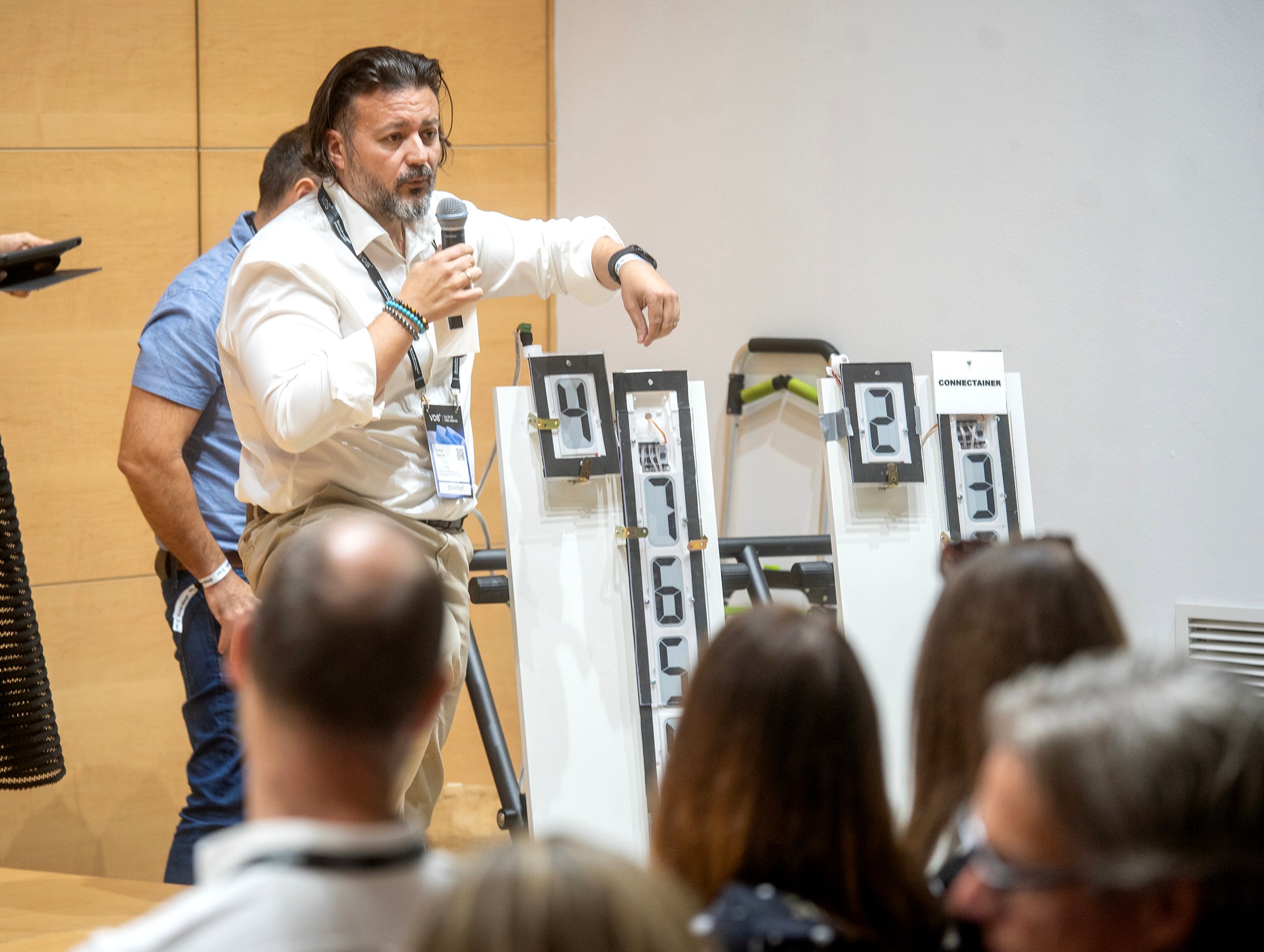
The most innovative thing is not that it is modular. What is surprising is that it solves a problem that seemed impossible: having a single container number whether it is operating as a 40-foot or as a 20-foot unit, without relying on wireless networks -made possible by magnetic e-ink screens that enable controlled "dynamic numbering". And on top of that, those screens require no energy to maintain the information: only to change it.
That is precisely what makes CONNECTAINER genuinely viable in the international logistics environment, allowing our innovation to comply with the administrative, legislative and customs regulations in force around the world. That technical detail perfectly captures our philosophy: simple changes, major impact.
7) If you had to sum up the future of port logistics innovation in a single short sentence, what would it be?
Focused on our concept, I believe it would be:
"Decarbonisation starts with efficiency."
Decarbonising is not just about finding better fuels: it is also about moving less "nothing" — reducing waiting times, unnecessary manoeuvres and unproductive maritime kilometres and miles. In logistics, many emissions come from systemic inefficiencies, not just from a ship's engine or a truck's exhaust.
%20(5)%201.png "Logo FV (Vertical) (5) 1")