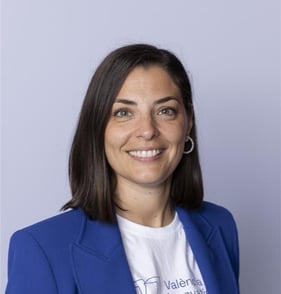



Interview with Helena Calva, Co-founder of Panssari
LinkedIn Helena
1. When was the moment you said “this has to exist”? What problem drove you to create your solution?
PANSSARI was born from a very clear conviction: with so much technology available, it makes no sense that we still manage the safety of people and infrastructure with systems that barely communicate with each other.
We wanted to create a solution capable of connecting all that information to anticipate risks and support real-time decision-making.
What began as a technological concern became a business venture with the mission of helping people work in safer environments.
I believe that bringing a female perspective to innovation isn't simply about having more women leading tech companies, but about broadening the questions we ask and the solutions we are able to imagine, because that makes it possible to identify risks and needs that have traditionally gone unnoticed.
One example of why this matters is that, in 2019, Associated British Ports introduced protective equipment adapted to the female body, improving its fit and safety.
That's why, for me, diversity isn't only about opening up opportunities, but about designing solutions that better protect everyone.
2. Logistics is a complex and strategic sector. How did you come to the logistics and port sector? What discovery surprised you most when you got to know it from the inside?
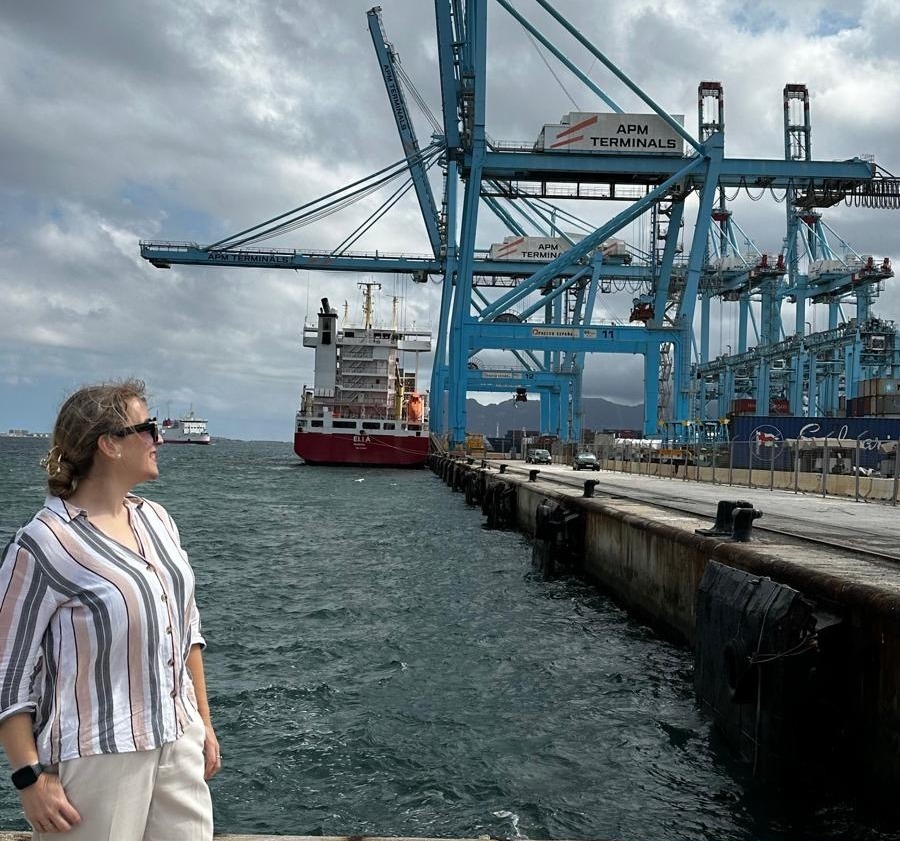
Our entry into the port sector came through Ports 4.0 and the opportunity to validate our technology at the Port of Santander. We discovered an extraordinarily complex environment, where people, vehicles, goods, heavy machinery and multiple operators coexist and need to coordinate constantly.
What surprised me most was finding that, despite the enormous level of industrialisation and automation in ports, there are still significant opportunities to improve visibility of what happens within their facilities.
We also discovered something especially valuable: when you listen to the people who work on the ground every day, you find problems that are hard to identify from an office.
3. The metric that matters beyond revenue. What number or indicator do you look at to know whether your startup's business and progress are really on the right track?
For me, one of the most important indicators is our ability to turn technological developments into solutions that can be deployed in a repeatable way.
We don't want to be a company that develops a different project for each client, but rather to build a technology platform that can adapt to different sectors using the same core.
Every time we manage to address a new need by reusing our technology, we confirm that we are building a scalable business. And, of course, there is another measure we must never lose sight of: that this technology is delivering real value to the people who use it.
4. The question nobody asks. What is the question you are never asked in meetings but should be asked to understand the impact of your solution?
I'd like to be asked more often: “What changes in day-to-day operations once your technology starts working?” In meetings we talk a lot about artificial intelligence, sensors, algorithms and technical capabilities, but sometimes we forget why we do all of it.
Our technology aims to enable a safety manager to anticipate a risk situation, an operator to work in a better-protected environment, or an infrastructure to have information it didn't have before. Innovation shouldn't be measured solely by its technological complexity, but by its capacity to improve reality.
5. What advice would you give, especially to women, girls and female entrepreneurs who want to start a business in the logistics and port sector?
I'd tell them not to wait until they feel completely ready or know every technical aspect of a sector before taking the leap. Knowledge is acquired, teams are built and experience comes from doing the work. What matters is having a clear vision, surrounding yourself with people who add value and learning to stand by your own decisions.
Starting a business in a traditionally male-dominated sector can feel intimidating at first, but it is also an opportunity to bring new perspectives. And I'd add something from my own experience: starting a business and having a baby at the same time requires a constant balancing act, and that shouldn't fall on just one of the parties.
We need environments that make it possible to combine both roles without one having to justify the other, because no one should be forced to give up their professional aspirations, nor their wish to be a mother.
6. For those who don't know you yet, tell us something surprising about your solution.
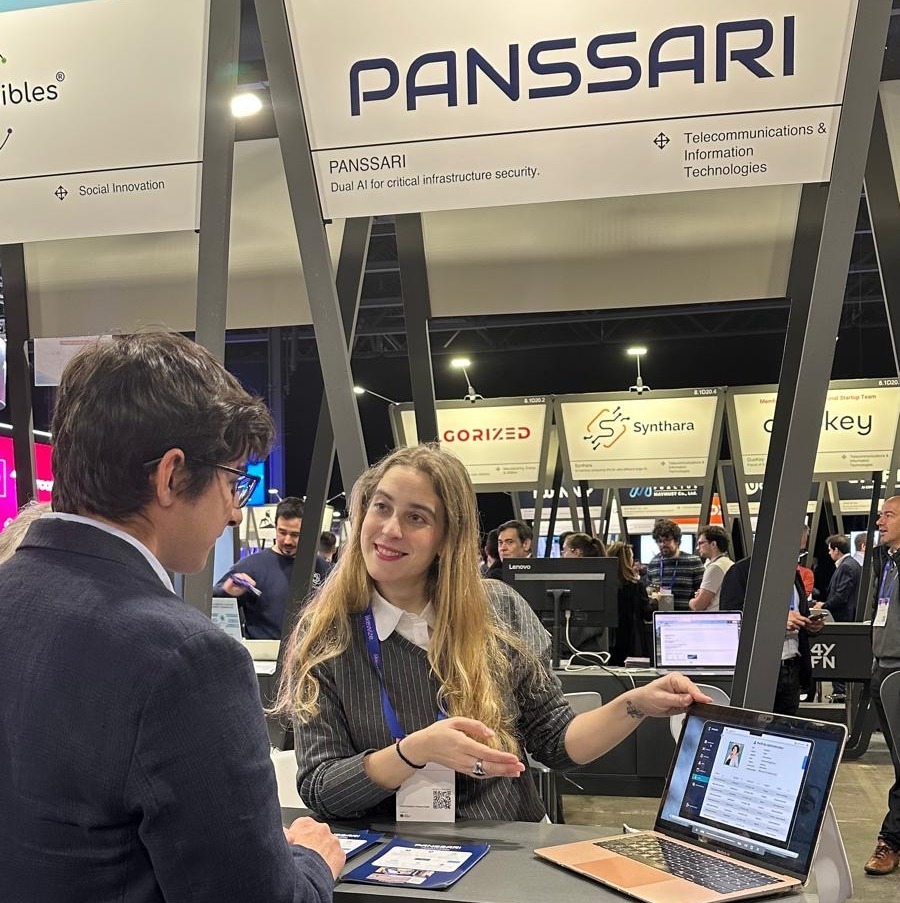
One of the most surprising things about PANSSARI is our technology that can detect and locate people without them needing to carry any device and without relying solely on cameras.
We do it using radio frequency. At our installation in the Port of Santander, we have validated detection capabilities even in situations with large metal obstacles, such as a freight train.
It is a technology with very interesting potential to improve safety in ports, critical infrastructure, mobility and, given its dual use, defence. And most importantly, it doesn't work in isolation, because we integrate it into a single platform with computer vision, access control and other sensors, giving us a 360º view without depending on a single system.
7. If you had to sum up the future of women and female talent in logistics and port innovation in one word or a short sentence, what would it be?
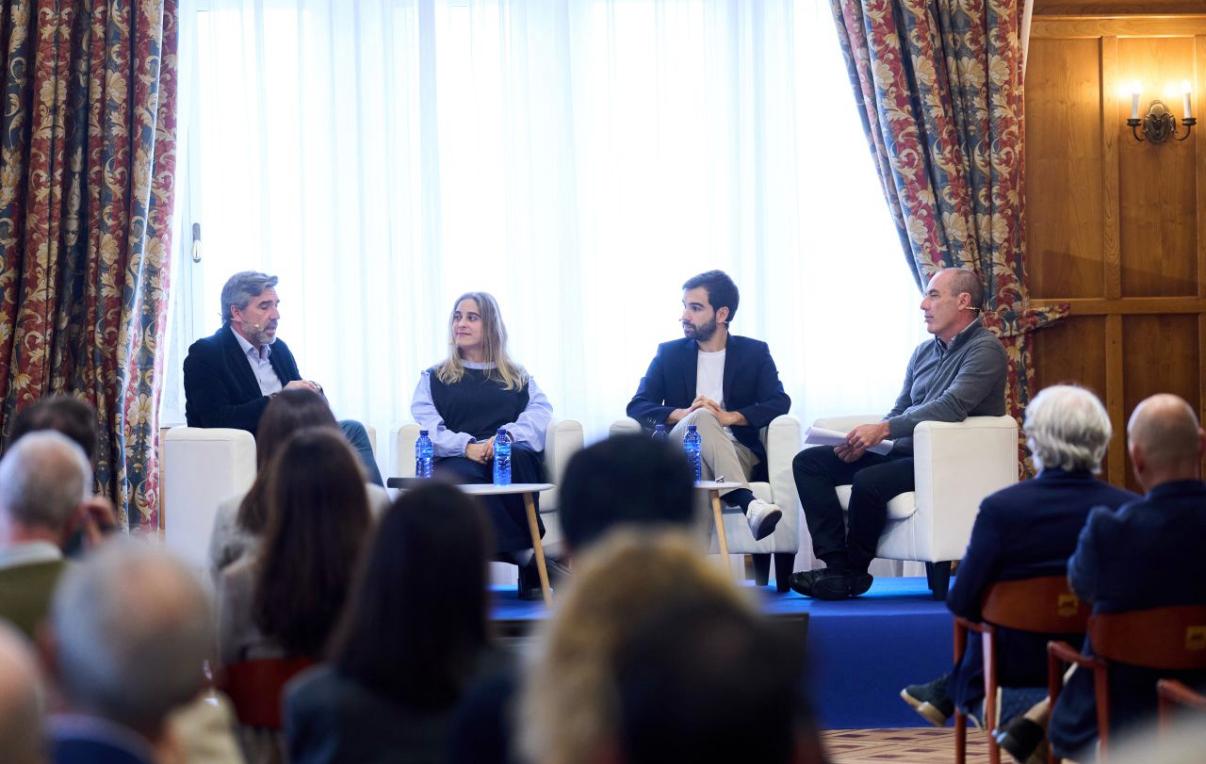
The logistics and port sector is opening up more and more. That's why now is the time to dare, take the leap and make female leadership no longer the exception. There is a great deal of talent hidden behind impostor syndrome that needs to come out and shine.
Post published on 19 November 2026, on the occasion of International Women's Entrepreneurship Day.